
How to Become a Flight Attendant in Canada: Career Steps and English Skills
If you’re interested in becoming a flight attendant in Canada, start by understanding the work and the qualities airlines look for in new cabin crew. Flight attendants combine passenger service with important safety responsibilities. Clear communication, teamwork, sound judgment, and the ability to stay calm are useful throughout the job.
This guide explains how to become a flight attendant in Canada, from meeting airline requirements and preparing for interviews to completing initial training. It also looks at how English communication skills can support your preparation, particularly if English is not your first language.
What does a flight attendant do?
Flight attendants help create a safe, comfortable experience on board. Before departure, they check the cabin, review safety procedures, and assist with boarding. During the flight, they explain safety information, respond to passenger questions, provide service, and coordinate with other crew members.
The safety responsibilities are especially important. Flight attendants must be able to use emergency equipment, respond to medical situations, assist during evacuations, and give instructions that passengers can understand. They also need to work professionally with people of different ages, cultures, and language backgrounds.
The job can involve early starts, changing schedules, overnight trips, and unexpected situations. People who enjoy customer service, travel, and collaborative work may find the variety appealing.

Step 1: Review flight attendant requirements in Canada
Each airline sets its own hiring criteria. The flight attendant requirements in Canada vary by employer and position, so use current job postings as your reference. Common areas to review include:
- Work eligibility: legal authorization to work in Canada and the ability to meet the conditions of the position.
- Education: many airlines ask for a high school diploma or an equivalent credential.
- Customer service: experience in hospitality, retail, tourism, restaurants, or other public-facing roles can be useful.
- Communication: strong spoken English is important, and French or additional languages may be valued.
- Travel documents: a valid passport and the ability to travel to destinations served by the airline.
- Safety and screening: requirements may include a minimum age, physical abilities, background checks, and medical or other assessments.
The airline’s recruitment materials will identify what applies to a particular vacancy. If you’re not ready to apply yet, you can still build relevant experience and prepare examples that show how you work with customers and colleagues.
Step 2: Develop the English skills used in aviation
Communication is part of almost every stage of a flight attendant’s work. Crew members give announcements, answer questions, explain boarding procedures, respond to concerns, and communicate with colleagues. In an emergency, they need to speak clearly and directly.
Practicing English for these specific situations can be helpful. Try explaining a delay to a passenger, politely handling a complaint, giving directions, or summarizing a safety instruction in simple terms. These exercises build fluency and help you choose language that fits the situation.
Listening matters just as much as speaking. Passengers may use different accents, expressions, or speaking speeds. Being able to understand questions, confirm details, and respond with patience helps build effective communication.
An accent does not prevent someone from communicating well. Focus on clarity, confidence, appropriate vocabulary, and a calm professional tone. If you speak other languages, that can also be an advantage for international routes and diverse passenger groups.

Step 3: Prepare for airline interviews and assessments
Airlines commonly recruit through their own careers websites. The hiring process can include an online application, a video or telephone interview, group exercises, individual interviews, and background or other checks. The order and format vary.
Interview questions often focus on customer service, teamwork, problem-solving, and handling difficult situations. Prepare short examples from school, work, volunteering, or daily life. Explain the situation, what you did, and how you helped achieve a useful result.
In group exercises, recruiters may look at how participants listen, share ideas, and work toward a decision. Practice contributing clearly while giving others space to speak. The same qualities can be valuable when coordinating with cabin crew during a busy flight.
Research the airline’s service expectations, destinations, and operating base before applying. This helps you understand the role and prepare questions that are relevant to the position.
Step 4: Complete the airline’s initial training
In Canada, the airline provides the required initial training after hiring a candidate. This training follows the applicable Transport Canada Flight Attendant Training Standard, TP 12296, as well as the airline’s approved procedures. The third edition of the standard took effect on December 1, 2025.
Training covers cabin safety, emergency equipment, evacuation procedures, onboard fire and smoke response, first aid, security, and procedures specific to the airline’s aircraft. Airlines also teach their service routines and operational expectations.
The length of training and the assessments involved depend on the airline. After a successful offer, the employer explains the next steps. Passing the required training is necessary before starting work in the cabin.
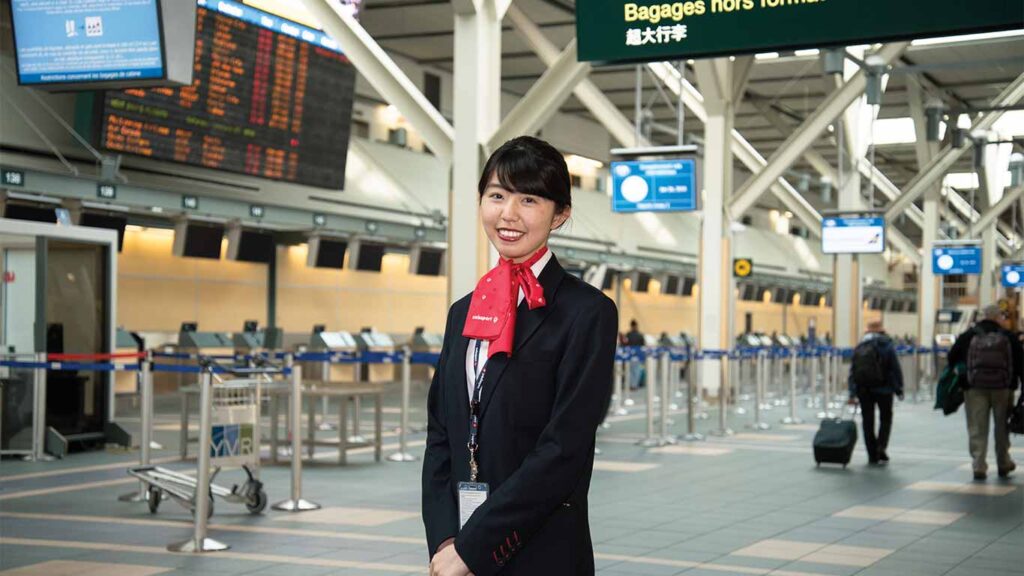
How to become a flight attendant in BC
If you’re exploring how to become a flight attendant in BC, review opportunities with airlines recruiting for Vancouver or other British Columbia bases. Vancouver International Airport connects domestic and international destinations, and some carriers recruit cabin crew to work from there.
A Vancouver-based flight attendant may operate a combination of short and longer routes depending on the employer, schedule, and seniority. Following airline careers pages and job alerts can help you learn when recruitment opens and which bases are accepting applications.
International students and working holiday participants should also check their authorization to work in Canada. An English-language course does not provide employment authorization on its own. Confirm applicable permit conditions through Immigration, Refugees and Citizenship Canada (IRCC).
Can an English or flight attendant preparation course help?
An optional preparation course can give you focused opportunities to practice the communication used in aviation. Topics might include passenger greetings, announcements, customer service situations, safety vocabulary, teamwork, and language used during emergencies.
Classroom activities such as role-plays, discussions, and case studies can help students practice speaking under different circumstances. Guest speakers or visits to aviation facilities may also help learners understand the working environment.
These courses are preparation for the application process and future workplace communication. The qualification training required to work as cabin crew is delivered by the airline after hiring.

Frequently asked questions (FAQ)
How long does it take to become a flight attendant in Canada?
The timeline depends on when an airline is recruiting and how its hiring process is organized. Successful candidates then complete initial training and assessments before starting cabin crew duties. Current training schedules are normally provided by the airline.
Do I need to attend a flight attendant school before applying?
A separate private course is not generally required before applying to Canadian airlines. The airline provides the mandatory training after hiring. Preparatory courses can help applicants practice English, customer service, and interview communication.
What are the flight attendant requirements in Canada?
Airlines commonly consider work eligibility, education, customer service experience, communication skills, passport and travel documents, and their safety and screening standards. Exact requirements depend on the airline and vacancy.
How important is English for flight attendants?
English is important for passenger communication, announcements, teamwork, and safety instructions. Some airlines also value French or other languages. Recruiters may assess communication skills during interviews and group activities.
Can international students become flight attendants in Canada?
Students can apply when they meet the airline's requirements and have authorization to work in Canada. An English-only study program does not itself provide off-campus work eligibility. Check your current immigration status and permit conditions.
How do I become a flight attendant in BC?
Look for positions with airlines recruiting for bases in British Columbia, review the job requirements, and prepare your application and interview skills. If hired, you complete the airline's initial training before working as cabin crew.
Preparing for the next opportunity
The strongest preparation combines an understanding of cabin crew responsibilities with customer service experience, communication practice, and familiarity with the airline recruitment process. Those skills can help you approach applications and interviews with a clearer sense of what the job involves.
If you're considering aviation-focused English study in Vancouver and want to explore what that looks like at VanWest College, visit its English for Flight Attendants course page for topics, prerequisites, and current availability.
Register Now