Vocational College Programs

Co-op Programs

Unlock Your Potential

Co-op Programs in Canada for International Students

Co-op programs in Canada combine classroom learning with structured workplace experience. For international students, a paid co-op program can provide a practical way to build Canadian work experience, strengthen job-ready skills, and understand how local workplaces operate.

At VanWest College, our vocational co-op programs connect academic study with paid placements, workplace preparation, hiring fairs, employer information sessions, and ongoing support from the Co-op team. Students can choose career-focused pathways in business, commerce and marketing, supply chain management, customer service, and hospitality in Vancouver, with Hospitality Management also available in Kelowna. We currently promote paid placements through more than 200 partner companies.

Get Ready to Work

What Is a Co-op Program in Canada?

A co-op, or cooperative education program, combines academic studies with work experience related to the student’s field. Students learn career-focused concepts in class, then apply that knowledge in a professional environment.

Co-op is essentially academic study plus work experience with participating employers. Students complete productive work, receive compensation, and have their progress monitored during the placement.

Key Highlights

Feature Regular
Diploma
Co-op
Diploma
Classroom Learning Included Included
Work Experience Not always included Built into the program
Paid Placement Not guaranteed Available through the paid co-op model
Career Preparation Varies by program Includes structured workplace preparation
Best For Academic learning Academic learning plus practical experience

A regular diploma may focus mainly on classroom learning. A co-op diploma adds a required work component that helps students apply their skills before graduation.

Why Choose Paid Co-op Programs in Canada?

Why Do International Students Choose Co-op Programs?

Many international students choose co-op programs in Canada because they want more than a qualification. They also want Canadian workplace exposure, stronger professional communication, interview experience, and a clearer understanding of employer expectations.


Are Co-op Programs in Canada Paid?

Many co-op programs in Canada are paid when the placement is structured as compensated employment. Our vocational pathways guarantee paid co-op placements for more than 200 partner companies.

What Does Paid Co-op Mean?

During a co-op placement:

  • Students perform productive work rather than only observing.
  • Students receive compensation for the work completed.
  • The placement is connected to the academic program.
  • Student progress is monitored by the college.

These elements form part of our cooperative education model.

Understanding Paid Co-op Expectations

Wages, schedules, employers, and responsibilities vary by placement. Students must continue to meet all study permits, work authorization, and program requirements. Co-op supports career preparation but does not guarantee permanent employment or an immigration outcome.


Study & Work

Can International Students Study and Work in Canada Throughout Co-op?

Yes, eligible international students may study and work through an approved co-op program, provided they meet current Immigration, Refugees and Citizenship Canada requirements.

Current Co-op Work Placement Rules

Check the Current Rules

As of April 1, 2026, eligible post-secondary international students do not need a separate co-op work permit for required student work placements, including co-ops and internships.

To participate, the placement must be required to complete the study program. Students must hold valid study authorization, study full-time at a designated learning institution, obtain confirmation from their institution, and meet the other conditions listed in the IRCC student work placement rules.

IRCC also states that there is no weekly hour limit for an eligible student work placement, although the work component cannot represent more than 50% of the total program.

Off-Campus Work During Study Terms

Eligible international students may work up to 24 hours per week off-campus during regular academic terms. They may work unlimited hours during qualifying scheduled breaks if they meet the applicable conditions.

Students should review the latest IRCC off-campus work rules and obtain a Social Insurance Number when required.

Academic Study Term Co-op Term
Attend scheduled classes Complete an approved workplace placement
Build academic and industry knowledge Apply skills in a real work environment
Eligible students may work part-time Students may work full-time as part of the placement
Regular off-campus work rules apply Student work placement rules apply

Students can work full-time during co-op terms and part-time during study terms, subject to eligibility and current government requirements.

Learn While You Earn

Why Choose a Paid Co-op Program in Canada?

Gain Canadian Work Experience

A co-op placement provides structured exposure to Canadian workplace standards, communication styles, teamwork, and employer expectations.

Build Practical Skills, Not Just Theory

Academic study and co-op can strengthen problem-solving, communication, customer service, leadership, time management, and industry-specific skills.

Prepare for the Canadian Job Search

Our co-op team helps develop job opportunities, manage mandatory documents, provide counselling and training, supervise the co-op process, and conduct site visits.

Earn During the Work Portion of the Program

Paid co-op allows students to receive compensation during the approved placement. This can support living costs, but earnings should not be treated as guaranteed funding for tuition or all personal expenses.

Quick Facts

  • Offered Location: Vancouver
  • Start Dates: 2026 – January 19, August 31 | 2027 – September 27
  • Total Length: 18 Months (total 72 weeks)
  • Study and Co-op Structure: 8 months study + 6 months co-op
  • Best For: Procurement, logistics, operations, analytics, and global trade

Find the Right Program

Choose the Supply Chain Management Co-op Diploma if you are interested in procurement, logistics, operations, analytics, transportation, or global trade. The program introduces the three connected areas of supply chain management and shows how data can support business decisions.

Quick Facts

  • Offered Location: Vancouver
  • Start Dates: 2026 – January 19, August 31 | 2027 – April 12
  • Total Length: 30 Months (total 120 weeks)
  • Study and Co-op Structure: 12 months study + 12 months co-op
  • Best For: Sales, marketing, advertising, e-commerce, and commerce

Find the Right Program

Choose the Commerce & Marketing Co-op Diploma if you want a mix of business, sales, marketing, advertising, market research, and e-commerce. This is our longest co-op pathway and includes 12 months of academic study plus 12 months of placement experience.

Quick Facts

  • Offered Location: Vancouver
  • Start Dates: 2026 – January 19, March 16, May 11, July 6, August 31, December 21 | 2027 – April 12, September 27
  • Total Length: 18 Months (Total 72 weeks)
  • Study and Co-op Structure: 8 months study + 6 months co-op
  • Best For: Leadership, accounting, marketing, management, and business operations

Find the Right Program

Choose the Business Management Co-op Diploma if you want a wider business foundation. The curriculum includes management, marketing, accounting, communication, leadership, project management, and workplace preparation.

Quick Facts

  • Offered Location: Vancouver
  • Start Dates: 2026 – January 19, March 16, May 11, July 06, August 31, December 21 | 2027 – August, 03, September 27
  • Total Length: 9 Months (Total 36 weeks)
  • Study and Co-op Structure: 4 months study + 4 months co-op
  • Best For: Customer relationships, sales, service, and workplace communication

Find the Right Program

Choose the Professional Customer Service Co-op Certificate if you want a shorter career training option. The program focuses on cross-cultural communication, business correspondence, customer relationships, service skills, and professional workplace communication.

Quick Facts

  • Offered Location: Vancouver
  • Start Dates: 2026: January 19, May 11, August 31 | 2027: May 10
  • Total Length: 15 Months (Total 60 weeks)
  • Study and Co-op Structure: 6 months study + 6 months co-op
  • Best For: Hotels, restaurants, guest services, tourism, and hospitality operations

Find the Right Program

Choose the Hospitality Management Co-op Diploma if you are interested in hotel operations, restaurants, food and beverage service, tourism, guest experience, or hospitality management. The program is available in both Vancouver and Kelowna.

Quick Facts

  • Offered Location: Kelowna
  • Start Dates: 2026: August 31 | 2027: August 30
  • Total Length: 14 Months (Total 56 weeks)
  • Study and Co-op Structure: 6 months study + 6 months co-op
  • Best For: Hotels, restaurants, guest services, tourism, and hospitality operations

Find the Right Program

Choose the Hospitality Management Co-op Diploma if you are interested in hotel operations, restaurants, food and beverage service, tourism, guest experience, or hospitality management. The program is available in both Vancouver and Kelowna.

More Options

Non-Co-op and Short Career Programs

We Are Here For You

How VanWest Supports Students Before and During Co-op

Receive the Full Support

Job Search Preparation

Students receive support with resumes, interviews, workplace communication, employer expectations, and job-search readiness. Program pages also describe on-campus activities and information sessions that give students first-hand exposure to how job hunting works in Canada.


Hiring Fairs, Information Sessions, and Workshops

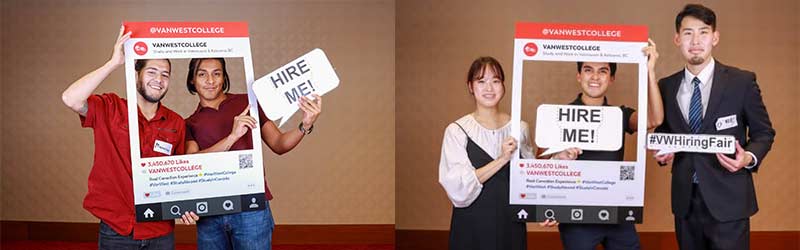
We organize hiring fairs, employer information sessions, and on-campus workshops. These events give students opportunities to learn from employers, improve career readiness, and practise professional networking.


Co-op Monitoring and Support

The Co-op team supports students through counselling, training, documentation, communication, placement supervision, and site visits. Individual meetings are arranged before the co-op term so students understand the process and required next steps.
Students must also participate actively by attending preparation activities, applying for suitable roles, preparing for interviews, and meeting placement requirements.

From Application to Paid Co-op

Start Your Journey

  • Step 1: Choose Your Program
    Compare our vocational programs based on subject, location, total duration, co-op length, and career interests.
  • Step 2: Review Admission Requirements
    Check the English and academic requirements on the individual program page. You can also review current tuition and fees before applying.
  • Step 3: Begin Academic Study
    Complete the classroom terms and build the foundational knowledge required for your chosen field.
  • Step 4: Prepare for the Canadian Job Search
    Work on your resume, interviews, networking, workplace communication, and understanding of employer expectations.
  • Step 5: Start Your Paid Co-op Placement
    Complete the approved work placement, perform productive duties, and apply your classroom learning in a professional setting.
  • Step 6: Graduate with Practical Experience
    After completing the academic and co-op requirements, graduate with workplace exposure connected to your field. This supports career readiness but does not guarantee a specific job or immigration result.
Student Success

Career Directions After a Co-op Program

From Co-op to Career

Career outcomes depend on education, experience, English ability, work authorization, employer needs, and labour-market conditions.

Program Possible Career Direction
Supply Chain Management Purchasing, procurement, logistics, transportation, and operations
Commerce & Marketing Sales, advertising, e-commerce, marketing coordination, and commerce
Business Management Administration, project support, leadership, marketing support, and business operations
Professional Customer Service Retail sales, guest service, client support, call centre, and operations support
Hospitality Management Guest services, hotel operations, tourism, food service, and hospitality support

WorkBC projects 1,052,000 job openings in British Columbia between 2025 and 2035. This provincial forecast is not a guarantee of employment. Students can use the WorkBC Labour Market Outlook to research career options.

Important Questions Before Choosing a Co-op Program

How Long Is the Co-op Term?

The co-op term is four months for Professional Customer Service, six months for Supply Chain Management, Business Management, and Hospitality Management, and 12 months for Commerce & Marketing.

Can I Work Part-Time During Study Terms?

Eligible international students may work up to 24 hours per week off-campus during regular academic terms. Always check current IRCC conditions before starting work.

Do I Need a Co-op Work Permit?

As of April 1, 2026, eligible post-secondary students do not need a separate co-op work permit for required placements. They must still meet IRCC student work placement conditions.

Is Co-op the Same as PGWP Eligibility?

No. A co-op component does not make a program eligible for the Post-Graduation Work Permit Program. Our vocational programs are not PGWP eligible. There’s a possible exception for Commerce & Marketing Co-op Diploma students who transfer to Vancouver Community College’s Bachelor of Hospitality Management degree and successfully complete it, provided they meet all IRCC criteria. Students should confirm their individual pathway before applying.

FAQs About Co-op Programs in Canada for International Students

What are co-op programs in Canada?

Co-op programs combine academic study with structured work experience related to the student’s field. The placement forms part of the program and allows students to apply classroom knowledge in a professional setting.

Are co-op programs in Canada paid?

Some co-op programs include paid placements. Our vocational co-op programs and students receive compensation for productive work.

Can international students complete paid co-op in Canada?

Yes, eligible international students can complete paid co-op placements when the placement is required by the study program, and all IRCC conditions are met.

Do international students need a co-op work permit in 2026?

Eligible post-secondary international students do not need a separate co-op work permit for required placements as of April 1, 2026.

Can I work while studying in Canada?

Eligible students may work up to 24 hours per week off-campus during regular terms and unlimited hours during qualifying scheduled breaks.

Which Canadian college offers paid co-op programs?

We offer paid co-op programs in business, commerce and marketing, supply chain management, professional customer service, and hospitality management.

What is the difference between a co-op diploma and a regular diploma?

A regular diploma may focus mainly on classroom study. A co-op diploma includes a structured workplace placement as part of the program.

Are co-op diplomas good for career training?

They can be a practical choice for students who want academic learning, workplace preparation, and experience applying their skills before graduation.

Can I work full-time during my co-op term?

Eligible students may participate full-time in an approved co-op placement. IRCC states there is no weekly hour limit for eligible student work placements, although the placement cannot exceed 50% of the total program.

Which VanWest co-op program should I choose?

Choose based on your career interests, preferred location, program length, co-op duration, admission requirements, budget, and long-term academic plans. An admissions advisor can help you compare the options.

Start Your Paid Co-op Journey with VanWest College

Build practical skills, gain Canadian workplace experience, and choose a career training program that connects academic study with paid co-op in British Columbia.